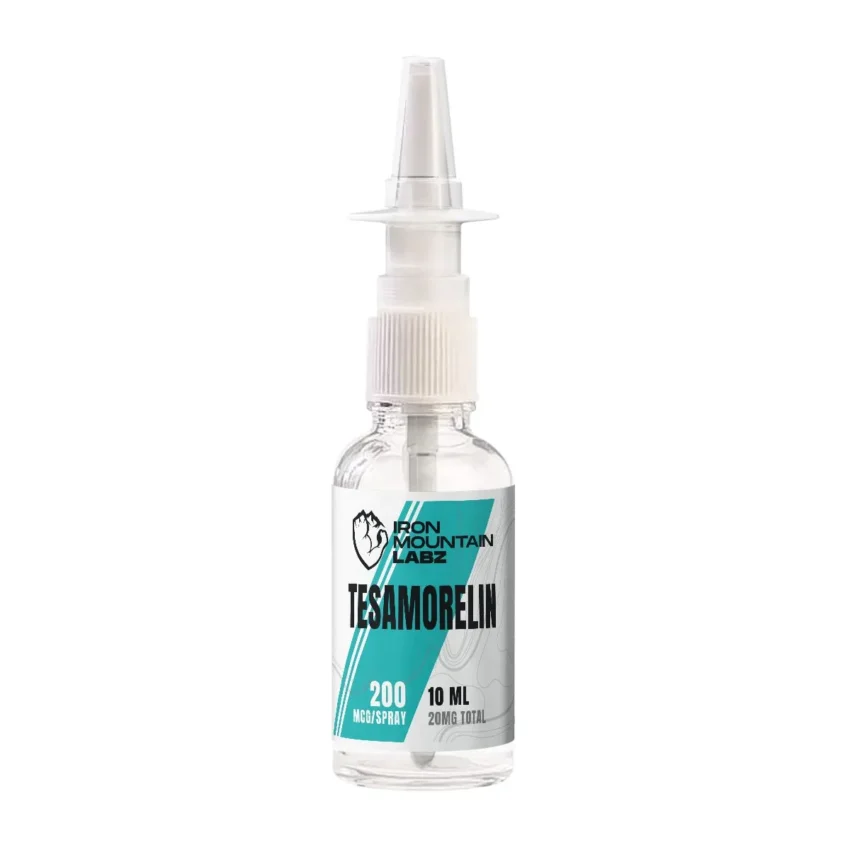
What Is Tesamorelin Nasal Spray and What GH/IGF-1 Axis Research Questions Does It Raise?
The GH/IGF-1 axis comprising hypothalamic GHRH neurons, anterior pituitary somatotroph cells, hepatic IGF-1 production, and peripheral IGF-1 receptor signaling is regulated through a layered neuroendocrine architecture whose spatial complexity creates distinct experimental access challenges for pharmacological research. Injectable GHRH analogs engage this axis primarily at the pituitary level, with systemic circulation delivering the compound to somatotroph GHRH receptors (GHRHR) through the hypophyseal portal blood supply. Intranasal delivery offers a fundamentally different anatomical access route: the olfactory epithelium’s direct neuroanatomical connection to hypothalamic structures through cribriform plate perineural spaces creates a potential pathway for GHRH analog peptides to reach the arcuate nucleus, periventricular nucleus, and median eminence where GHRH-producing neurons express GHRHR as autoreceptors before entering the systemic circulation.
The tesamorelin nasal spray formulation model is being investigated as a research tool precisely because this hypothalamic-level engagement possibility creates scientific questions about the GH/IGF-1 axis that are inaccessible through injectable GHRH analog delivery. Does intranasal tesamorelin, in addition to engaging pituitary somatotroph GHRHR through systemically absorbed fractions, also activate GHRH neuron autoreceptors at the hypothalamic level? And if so, does this dual-level GHRHR engagement produce qualitatively different GH pulse parameter profiles potentially modifying both pulse frequency (hypothalamically determined) and pulse amplitude (pituitarily determined) relative to injectable administration?
Scientific interest in tesamorelin nasal spray for sale through validated research suppliers reflects the growing intersection of GHRH receptor pharmacology, intranasal CNS delivery science, and GH axis neuroendocrinology research fields whose convergence is creating new experimental opportunities for understanding somatotropic axis regulation.
What Structural Features of Tesamorelin Are Relevant to Intranasal GH Axis Research?
Tesamorelin (MW ≈ 5,135 Da) is a 44-amino acid GHRH(1–44)-NH₂ analog with a trans-3-hexenoic acid N-terminal conjugation that provides partial DPP-IV resistance while preserving the receptor-binding pharmacophore. The compound’s amphipathic alpha-helical structure spanning residues 1–29 and comprising a hydrophobic face (Val2, Ala5, Phe6, Ile9, Leu13, Leu17) and a hydrophilic face is the primary determinant of GHRHR binding geometry and must remain intact through nasal mucosal permeation and systemic distribution to maintain receptor-binding competence at the pituitary or hypothalamic GHRHR target.
The molecular weight of ~5,135 Da presents a substantial challenge for nasal mucosal permeation research compared to smaller peptides like ipamorelin (~712 Da). Tight junction paracellular transport is essentially excluded for molecules of this size, making transcellular mechanisms receptor-mediated endocytosis, adsorptive transcytosis, lipid raft-mediated membrane uptake the relevant permeation pathways that must be enabled through formulation science. The N-terminal lipophilic trans-3-hexenoic acid modification may contribute to membrane affinity that could facilitate lipid raft interaction, creating a natural formulation handle that researchers have explored in nanocarrier encapsulation studies.
Importantly, the GH/IGF-1 axis provides a uniquely quantifiable pharmacodynamic endpoint for evaluating intranasal tesamorelin bioavailability: plasma GH pulse parameters (amplitude, frequency, AUC) and circulating IGF-1 concentrations are measurable in rodent models with standard ELISA and RIA techniques, enabling direct quantitative comparison between intranasal and injectable delivery routes without requiring complex receptor occupancy imaging methods.
How Does Tesamorelin Engage GHRHR and Activate the GH/IGF-1 Axis?
What Is the Complete Mechanism of GHRHR Engagement by Tesamorelin?
Research suggests that tesamorelin’s receptor engagement mechanism follows the canonical class B GPCR two-domain binding model: the C-terminal amphipathic helix (residues ~15–44) forms initial contacts with the receptor’s extracellular domain (ECD) through both hydrophobic and electrostatic interactions, anchoring the peptide in the correct orientation for subsequent transmembrane engagement. The N-terminal helix (residues 1–15) then inserts into the TM bundle, stabilizing the receptor in the active conformation that enables Gαs protein coupling. Key N-terminal contact residues identified through alanine scanning Tyr1, Val2, Asp3, Ala4, Ile5 make energetically dominant contributions to receptor activation that must be preserved through the formulation and delivery process for intranasal tesamorelin to retain GHRHR agonist activity.
What Signaling Cascade Propagates GH/IGF-1 Axis Activation?
GHRHR Gαs coupling stimulates adenylyl cyclase, elevating intracellular cAMP and activating PKA. PKA phosphorylates CREB (Ser133), driving GH1 gene transcription and GHRHR gene upregulation in somatotrophs. Parallel MAPK/ERK activation through a cAMP-independent mechanism contributes to somatotroph proliferation and pituitary plasticity. VGCC opening drives Ca²⁺ influx and GH-containing secretory granule exocytosis, producing pulsatile GH release into the portal and systemic circulation.
Systemically released GH engages GHR on hepatocytes through JAK2/STAT5b phosphorylation, driving IGF-1 (somatomedin C) gene transcription. Circulating IGF-1 activates IGF-1R tyrosine kinase on target tissues adipocytes (PI3K/AKT-mediated lipolysis suppression), myocytes (mTORC1-mediated protein anabolism), osteoblasts (PI3K/AKT/GSK3β-mediated bone matrix synthesis) while simultaneously stimulating hypothalamic somatostatin (SST) release from periventricular neurons, establishing the negative feedback loop that governs GH pulsatility amplitude and inter-pulse trough maintenance.
How Does Intranasal Delivery Potentially Alter GH/IGF-1 Axis Engagement Compared to Injection?
Research suggests that intranasally delivered peptides can access hypothalamic parenchyma through olfactory ensheathing cell-mediated transport along olfactory nerve (CN I) perineural spaces and through trigeminal nerve (CN V) pathways to the brainstem and diencephalon bypassing the BBB and distributing differently from systemically injected compounds. For tesamorelin specifically, intranasal transport to hypothalamic GHRH neurons could create GHRHR autoreceptor engagement a pharmacological phenomenon where GHRH analog delivery to the GHRH neuron cell body itself modulates neuron firing pattern, neuropeptide synthesis, and dendritic GHRH release into the hypothalamic portal circulation. This autoreceptor modulation is a hypothalamic-level pharmacological event that is not possible through systemic injection, where BBB exclusion prevents GHRH analog access to hypothalamic parenchyma.
What Research Domains Does Tesamorelin Nasal Spray Address?
How Does Intranasal Tesamorelin Contribute to Metabolic and Lipid Research?
The GH/IGF-1 axis engagement produced by tesamorelin GHRHR activation has well-characterized downstream effects on visceral adipose tissue gene expression suppression of PPARγ, FASN, and ACC (lipogenic pathway genes), upregulation of HSL, ATGL, and CPT1α (lipolytic and fatty acid oxidation genes) that make tesamorelin a standard research tool in visceral adiposity, lipodystrophy, and NAFLD model studies. Intranasal tesamorelin delivery allows researchers to investigate whether equivalent or differential downstream metabolic endpoints can be achieved through CNS-targeted delivery relative to subcutaneous injection a comparison with mechanistic implications for understanding how hypothalamic GH axis regulation versus direct pituitary stimulation differentially contributes to peripheral lipid metabolism remodeling.
What Does GH Axis Aging Research Reveal About Tesamorelin’s Investigational Value?
The age-associated somatotropic decline involves three converging mechanisms: reduced hypothalamic GHRH neuron density (reduced arcuate nucleus GHRH mRNA expression documented in aged rodent models), decreased pituitary GHRHR expression density, and elevated periventricular SST tone. Tesamorelin’s potential to engage hypothalamic GHRHR autoreceptors through intranasal delivery may address the first mechanism in ways injectable administration cannot: modulating hypothalamic GHRH neuron activity and potentially reducing SST tone through altered hypothalamic circuit dynamics. Research testing this hypothesis in aged rodent models using intranasal versus subcutaneous tesamorelin, with 24-hour GH pulse analysis and hypothalamic GHRH/SST mRNA quantification as endpoints, represents a scientifically high-value preclinical investigation design.
Does Intranasal Tesamorelin Offer Applications in Neurological Research?
GHRHR expression has been documented in hippocampal neurons, cerebral cortex, and cerebellum in addition to hypothalamic and pituitary sites. Research suggests that GH/IGF-1 axis activation through GHRHR engagement may modulate hippocampal neurogenesis, synaptic plasticity (LTP), and oxidative stress management in neural tissue with IGF-1’s known neuroprotective effects through PI3K/AKT/mTOR and MAPK/ERK signaling in hippocampal neurons creating a potential link between somatotropic axis pharmacology and cognitive biology. Intranasal tesamorelin delivery may distribute to hippocampal GHRHR populations through olfactory and trigeminal transport, making this neurological research dimension accessible to investigation in appropriately designed preclinical studies.
What Have Preclinical Studies Revealed About Tesamorelin’s GH Axis Pharmacodynamics?
Injectable tesamorelin pharmacodynamic studies in rodent models have established measurable benchmarks: GHRHR affinity (Ki ~0.5–2 nM), dose-dependent cAMP accumulation in pituitary cell preparations, GH pulse amplitude augmentation of 2–4× baseline in pharmacodynamic studies, elevated plasma IGF-1 concentrations following repeated administration, and downstream adipose/hepatic gene expression changes including PPARγ suppression and ATGL upregulation. These injectable benchmarks define the systemic exposure thresholds required for meaningful GH axis engagement, providing the reference framework against which intranasal bioavailability studies must demonstrate adequate absorption.
Published clinical injectable tesamorelin studies (Falutz et al., 2010) in HIV-associated lipodystrophy models documented significant reductions in visceral adipose tissue area and improvements in lipid parameters establishing pharmacodynamic endpoint data that contextualizes the GH axis engagement levels required for metabolic research relevance in translational preclinical settings.
What Are the Broader Scientific Implications of Tesamorelin Nasal Spray Research?
Tesamorelin nasal spray research contributes to three converging scientific frontiers. First, in neuroendocrinology, it creates experimental access to hypothalamic GHRHR autoreceptor pharmacology that is blocked by the BBB in systemic delivery paradigms opening a new mechanistic layer of GH axis regulation to pharmacological investigation. Second, in peptide delivery science, it provides a ~5 kDa GHRH analog model payload with quantifiable pharmacodynamic endpoints for evaluating nasal delivery technologies including lipid nanoparticles, mucoadhesive polymers, and cell-penetrating peptide conjugation systems. Third, in aging biology, it offers a route to investigating whether hypothalamic somatotropic axis modulation through intranasal GHRH autoreceptor engagement can complement pituitary-level GHRHR stimulation in restoring the GH pulse parameter profile characteristic of younger neuroendocrine function.
Conclusion: How Does Tesamorelin Nasal Spray Advance GH/IGF-1 Axis Research?
Tesamorelin nasal spray advances GH/IGF-1 axis research by providing access to a hypothalamic pharmacological dimension GHRH neuron autoreceptor engagement through olfactory pathway delivery that is mechanistically inaccessible to injectable GHRH analog administration. The compound’s well-characterized GHRHR full agonist pharmacology, quantifiable GH pulse amplitude and IGF-1 pharmacodynamic endpoints, and established injectable reference data collectively position intranasal tesamorelin as a scientifically substantive research model for investigating how route-of-administration determines qualitative differences in somatotropic axis engagement.
This article is provided strictly for scientific and informational reference purposes. Tesamorelin nasal spray is not FDA-approved and is not intended for human or veterinary use. Research must be conducted under appropriate institutional oversight and regulatory compliance.
References
- Falutz, J., et al. (2010). “Effects of tesamorelin in HIV-infected patients with abdominal fat accumulation.” AIDS, 24(10), 1531–1537. DOI: 10.1097/QAD.0b013e3283389a6c
- Frohman, L.A., & Kineman, R.D. (2002). “Growth hormone-releasing hormone and pituitary development, hyperplasia and tumorigenesis.” Trends in Endocrinology & Metabolism, 13(7), 299–303. DOI: 10.1016/S1043-2760(02)00613-5
- Ionescu, M., & Frohman, L.A. (2006). “Pulsatile secretion of growth hormone persists during continuous stimulation by CJC-1295.” Journal of Clinical Endocrinology & Metabolism, 91(12), 4792–4797. DOI: 10.1210/jc.2006-1702
- Veldhuis, J.D., et al. (2006). “Differential impact of age, sex steroid hormones, and obesity on basal versus pulsatile growth hormone secretion in men.” Journal of Clinical Endocrinology & Metabolism, 90(9), 5175–5183. DOI: 10.1210/jc.2005-0494
- Thorne, R.G., et al. (2004). “Delivery of insulin-like growth factor-I to the rat brain along olfactory and trigeminal pathways following intranasal administration.” Neuroscience, 127(2), 481–496. DOI: 10.1016/j.neuroscience.2004.05.029
- Frey, W.H., et al. (1997). “Delivery of 125I-NGF to the brain via the olfactory route.” Drug Delivery, 4(2), 87–92. DOI: 10.3109/10717549709051878